

Linen dresses are basically the uniform for warm, still air. The problem is: cold-water coasts are rarely warm or still.
If you’ve ever packed “cute summer clothes” for a seaside trip and ended up living in the same hoodie for three days, you already know the issue. Coastal cold is sneaky. Wind cuts through light fabrics. Mist shows up out of nowhere. And even when the sun is out, the air can feel like it came straight off the ocean (because it did).
Scandinavian coastal style solves this with a simple idea: you dress for wind and damp first, and you make it look good second. That usually means layering, wool and cotton in the right places, and outerwear that can handle surprise weather. It’s not about looking “outdoorsy.” It’s about building outfits that still feel intentional when the temperature drops 10 degrees near the water.
I’ll show you the best linen-dress substitutes, how to layer them, and the outfit formulas that look coastal-cool, not “I packed wrong.”
Quick answer for skimmers
The clean swap for a linen dress on a cold-water coast:
- Merino tee or long-sleeve + midi skirt + waterproof jacket
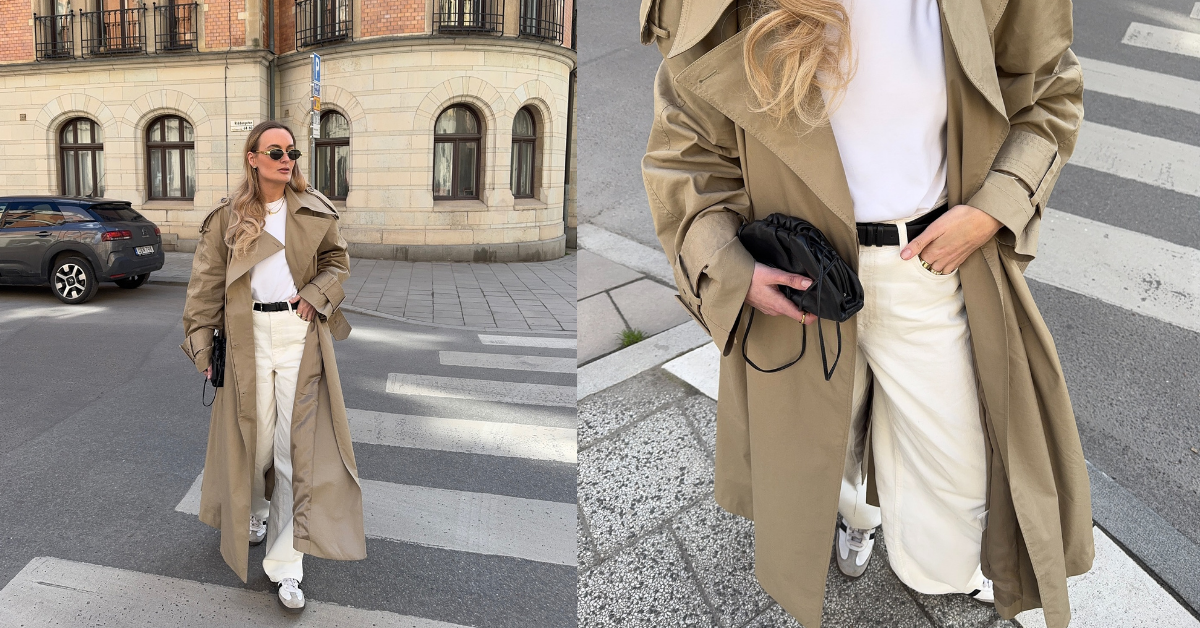
- Lightweight knit dress + trench or shell + boots
- Poplin shirt dress + sweater over shoulders + raincoat
- Straight-leg jeans + Breton stripe + fisherman knit
- Wide-leg trousers + tank + cardigan + windproof outer layer
Best fabrics when it’s windy and damp:
- Merino wool and wool blends for warmth and moisture management
- Tightly knit sweaters (the classic seafaring move)
- Cotton poplin and denim for structure (then add wind protection on top)
If you only do one thing:
Bring a real windproof layer (raincoat, shell, or trench with a storm flap). It makes every “summer” outfit wearable on the coast.
Why linen dresses feel wrong on cold-water coasts
Linen is absorbent and quick-drying, which is why it shines in hot weather. But on a cold-water coast, the conditions that make linen cute also make it annoying:
- Wind finds every gap in a loose weave.
- Damp air + bare legs can feel chilly even at mild temps.
- Mist or drizzle can leave you feeling clammy faster than you expect.
This doesn’t mean “never wear linen.” It just means linen works better as a layer (like a shirt) than as your whole plan when the forecast is coastal and unpredictable.
The Scandinavian decision framework: Dress for elements, then style
Scandi coastal outfits tend to follow a repeating pattern:
1) A breathable base
Merino or a simple tee that doesn’t get gross when the weather shifts. Merino is widely used for base layers because of moisture management and temperature regulation.
2) A warm middle that still looks “normal”
Think fisherman knit, cardigan, or a structured sweater. There’s a reason historic seafaring sweaters were tightly knit and designed for harsh conditions.
3) A wind and rain cap
A proper outer layer is the difference between “cute outfit” and “I’m cold and mad.” Norwegian layering guides put windproof and waterproof outer layers at the center of staying comfortable.
Common mistakes (and fixes)
- Mistake: Trying to make one dress do everything.
Fix: Switch to a base + layer + outerwear system. - Mistake: Wearing a warm sweater but no wind protection.
Fix: Add a shell or raincoat. Wind is what makes you feel cold. - Mistake: Choosing “pretty shoes” that can’t handle wet pavement.
Fix: Bring one water-resistant option (boots or sturdy sneakers). - Mistake: Packing only summer fabrics.
Fix: Add merino and a knit. Wool can absorb a lot of moisture vapor without feeling wet and can release heat as it absorbs moisture, which is part of why it performs well in cold, damp conditions.
This won’t work if you refuse layers on principle. Coastal comfort is basically a layering tax. You can still keep it minimal, but you need at least two layers and a windbreak.
Scandinavian alternatives to linen dresses (that still look coastal and feminine if you want)
1) Knit dress + outer layer (the easiest “dress person” swap)
If you love the simplicity of a dress, a lightweight knit dress is your best cold-water cousin to linen.
Why it works: It holds warmth better, plays nicely with tights, and looks intentional under a coat.
How to style it:
- Knit midi dress + raincoat + ankle boots
- Knit dress + trench + scarf + sneakers
- Knit dress + cardigan + shell over top (yes, double layer)
Tip: Keep the dress simple and let texture do the work.
2) Poplin shirt dress (with built-in structure)
Cotton poplin gives you that crisp, clean feeling without the “wind-through-linen” problem.
How to modernize it for a cold coast:
- Poplin shirt dress + merino base layer underneath + raincoat
- Add tights + loafers or boots
- Layer a fisherman sweater over it so it reads like a skirt
This is optional. Skip it if shirt dresses make you feel too “done.” The rest of these options work just as well.
3) Midi skirt + merino top (quiet, practical, very Scandinavian)
A midi skirt gives you the ease of a dress but lets you control warmth with layers.
Best skirt types for cold-water coastal:
- Satin slip skirt (with knitwear on top)
- Denim midi
- Heavy cotton or twill
Outfit formulas:
- Merino long-sleeve + midi skirt + chunky cardigan + raincoat
- Tee + slip skirt + fisherman knit + sneakers
- Turtleneck + denim midi + boots + trench
4) Wide-leg trousers instead of bare legs
If the issue with linen dresses is cold legs, wide-leg trousers are the cleanest fix.
Look for:
- Cotton twill
- Wool blend trouser
- Pleated pants that layer over tights
Outfit formulas:
- Wide-leg trouser + Breton stripe + raincoat
- Tank + cardigan + trouser + windproof shell
5) “Fisherman-core” without looking like a costume
The coastal knit is a real Scandinavian staple, and modern coverage still leans into nautical pieces for summer wardrobes. The key is not stacking every nautical thing at once.
I usually tell people to pick one coastal signal:
- Breton stripe OR
- Fisherman sweater OR
- Barn jacket / raincoat OR
- Boat shoe / lug boot
One is chic. Four is theme party.
The cold-water coastal capsule (10 pieces that replace “linen dress energy”)
- Merino tee or long-sleeve (base)
- Breton stripe top (easy coastal signal)
- Fisherman knit or wool sweater (mid layer)
- Cardigan (temperature control)
- Windproof raincoat or shell (non-negotiable)
- Trench or longer coat (looks polished, blocks wind)
- Straight-leg jeans or denim midi (structure)
- Wide-leg trousers (warm legs, modern silhouette)
- Midi skirt or knit dress (the “dress alternative”)
- Water-resistant shoes (boots or sturdy sneakers)
If you pack just these categories, you can build 15+ outfits that make sense by the water.
Outfit formulas you can copy
1) The “Scandi errands by the harbor”
Merino base + straight jeans + fisherman knit + raincoat + sneakers
2) The “I still want a dress”
Knit midi dress + trench + scarf + ankle boots
3) The “windy seaside dinner”
Slip skirt + chunky sweater + long coat + boots
4) The “museum day near the coast”
Poplin shirt + wide-leg trousers + cardigan + shell
5) The “cute but not freezing”
Tee + denim midi + sweater over shoulders + raincoat
One trade-off with no real solution: if you want the floaty romance of linen dresses, these outfits will feel more structured. That’s the point, but it’s a different mood.
Fabric cheat sheet: what to choose when it’s damp and windy
Merino and wool (best for cold-damp comfort)
Wool can absorb substantial moisture vapor without feeling wet and can release heat during absorption, which helps in cold, damp conditions. REI also notes merino’s performance as a base layer and its moisture behavior.
Best uses: base layers, sweaters, socks.
Cotton poplin, denim, twill (best for structure)
These keep outfits looking “real clothes” instead of technical gear. Just don’t rely on cotton alone for warmth if you’re getting wet and cold.
Waterproof-breathable outer layers (best for wind)
Layering resources for Norway consistently emphasize a protective outer layer against wind and rain.
FAQ
Can I wear linen at all on a cold-water coast?
Yes, but treat it as one piece in a system. Linen is absorbent and dries faster than cotton, which is great, but it’s not inherently warm. Pair linen with knitwear and wind protection.
What’s the most “Scandinavian” one-item replacement for a linen dress?
A simple knit midi dress, or a midi skirt + sweater combo.
How do I avoid looking bulky with layers?
Keep the base slim, keep the outer layer structured, and let the middle layer be the cozy one. Also: fewer accessories. Coastal wind already adds drama.
Why do fishermen sweaters show up so much in coastal style?
Because they were literally designed for harsh sea conditions. Vogue Scandinavia highlights a historic Norwegian seafaring sweater designed to shield fishermen and sailors from North Sea weather.
What shoes look right and still work in wet weather?
Ankle boots with a sturdier sole, water-resistant sneakers, or lug loafers (weather dependent). The “clean” shoe shapes can still be practical.
What if my trip is summer but the water is freezing?
That’s exactly when these outfits shine. Air temps can be mild, but wind off cold water can feel sharp. A shell or raincoat is your insurance policy.
Just a little note - some of the links on here may be affiliate links, which means I might earn a small commission if you decide to shop through them (at no extra cost to you!). I only post content which I'm truly enthusiastic about and would suggest to others.
And as you know, I seriously love seeing your takes on the looks and ideas on here - that means the world to me! If you recreate something, please share it here in the comments or feel free to send me a pic. I'm always excited to meet y'all! ✨🤍
Xoxo Frida
