

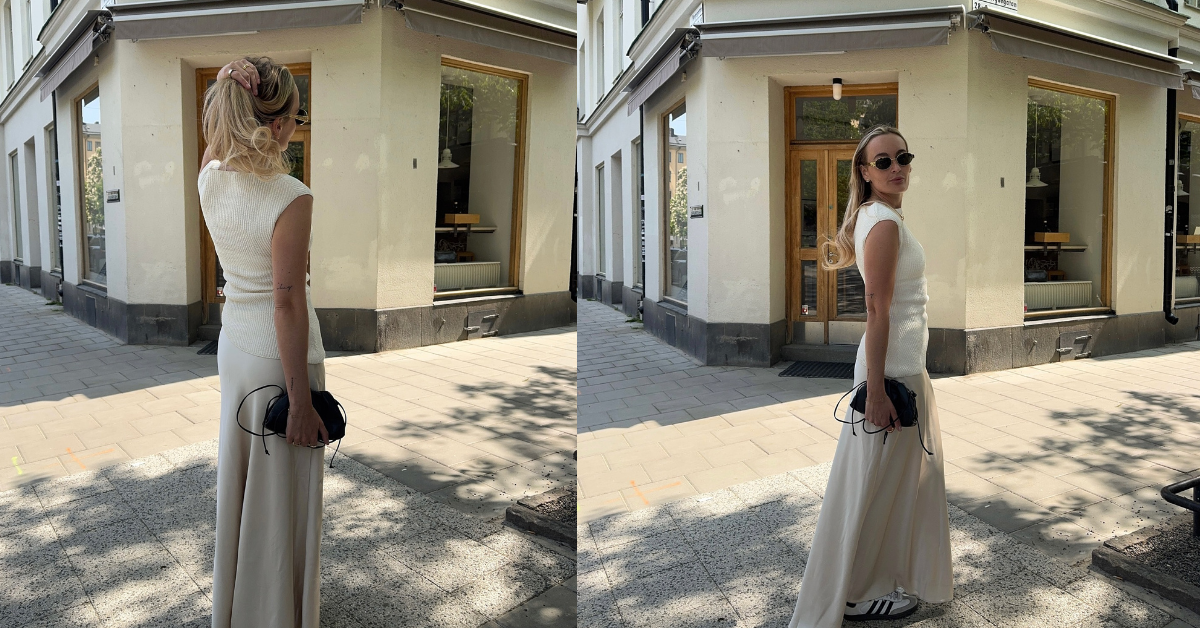
If you look at Scandinavian style from far away, it can seem almost boring: neutrals, clean coats, straight jeans, sensible shoes, minimal makeup. And yet, it reliably looks good in photos, on the street, and in real life. That’s the puzzle.
The trick is that “Scandi style” is not built to win the trend cycle. It’s built to survive your actual week: walking, weather changes, commuting, rewearing pieces, layering, and looking put-together without a lot of fuss. A lot of Nordic brands literally describe their DNA as simplicity, quality, and longevity.
It also helps that Copenhagen Fashion Week has positioned itself as a platform with formal sustainability requirements for participating brands, which reinforces the idea of fewer, better decisions instead of pure novelty.
So when Scandi fashion looks “timeless,” it’s not magic. It’s a system.
Quick answer for skimmers
- Scandinavian outfits look good because they prioritize coherence over “statement.”
- They use repeatable silhouettes (straight trousers, long coats, knits) so the eye reads “intentional.”
- Neutrals and tone-on-tone dressing create low visual noise, which photographs well and feels modern longer.
- Layers are functional (weather) but also structural (they add shape), which makes basics look styled.
- Quality fabrics and fit do more work than logos, prints, or “trendy items.”
- Scandi style still includes color and weirdness, but usually as one controlled twist, not ten competing signals.
If you only do one thing: build a simple “uniform” (coat + knit + straight-leg bottom + everyday shoe) and only swap one element at a time.
The real reason it never looks “trendy”
A trend is a loud signal: a specific micro-silhouette, a viral color, a recognizable accessory. Scandinavian style tends to avoid stacking loud signals. Instead, it relies on what I’d call slow signals:
1) Coherence beats novelty
Scandi outfits often look like they were designed as a set, even when they weren’t. That’s because the pieces share:
- a tight color range
- similar textures (matte over shiny)
- consistent proportions (not wildly changing top to bottom)
Financial Times has described modern minimalism as a durable, quality-driven approach that keeps appealing across seasons, and Nordic brands like Toteme are often included in that “modern masters” category.
2) It’s optimized for layering (aka, real weather)
When you live somewhere that can shift from wind to rain to cold in a day, you learn to dress like a reasonable person. Layers become the default, not a styling hack. Vogue’s coverage of Scandi influence specifically calls out all-season wear and layering as core to the look.
3) The “uniform” effect makes everything look intentional
A uniform is not boring. It’s an editing choice. When you repeat a silhouette, people read it as personal style, not “I’m trying something.”
I usually tell people to stop chasing variety at the top level. One great coat plus two great knits will make you look more stylish than ten random trendy tops.
4) The culture and fashion system reward durability
Copenhagen Fashion Week has pushed a sustainability framework with minimum standards for brands on its official schedule, which supports a broader identity: progress, accountability, and longer-term thinking.
This does not mean everyone in Scandinavia dresses the same. It does mean the fashion conversation there has a strong “make it work in real life” bias.
The Scandi Style decision framework
Use this as a translator. If you want the “always looks good” effect, you’re aiming for these inputs:
Principle 1: Choose a silhouette family and stick with it
Pick 1–2 silhouette “lanes” that suit your life:
- Straight or wide-leg trousers + fitted or clean-knit top
- Long coat + relaxed denim + simple shoe
- Oversized blazer + straight jeans + low-profile sneaker or boot
The magic is not the items. It’s the repetition.
Principle 2: Keep a tight palette, then add one accent
Tone-on-tone dressing is a classic Scandi move: creams, taupes, greys, navy, black, muted browns. Vogue explicitly frames tone-on-tone and natural fibers as part of the Scandi formula.
Then choose ONE:
- one pop of color (bag, scarf, knit)
- one interesting texture (leather, shearling, brushed wool)
- one slightly odd shape (a sculptural knit, a curved bag)
Principle 3: Let fabric do the flex
This is the unsexy part, but it’s the real one: thicker knits, better wool, structured cotton, good denim. Minimalism looks expensive when the fabric has body and sits cleanly.
Principle 4: Make comfort part of the aesthetic
Nordic brands often frame style as ease and practicality, not suffering. Filippa K, for example, openly positions itself around simplicity and quality with a “fewer, better” mindset.
This won’t work if your lifestyle requires ultra-formal dress every day. You can still use the palette and cohesion tricks, but the relaxed silhouettes might not translate directly.
Application: How to dress “Scandi” without buying a new wardrobe
If you already have a routine that works, you can skip this section and go straight to the variations below.
Step 1: Build a 4-piece base outfit
Choose:
- Outer layer: long coat, trench, structured blazer
- Mid layer: knit, button-up, tee, turtleneck
- Bottom: straight denim or tailored trouser
- Shoe: clean sneaker, boot, loafer
That is the whole engine.
Step 2: Use the 1–1–1 rule
- 1 structured piece (coat, blazer, trouser)
- 1 soft piece (knit, tee, scarf)
- 1 practical piece (denim, sneaker, weather-ready boot)
That mix keeps you from looking either overdressed or sloppy.
Step 3: Edit your accessories down
Scandi styling often looks good because it’s not fighting itself.
- One bag you wear constantly
- One simple jewelry “set”
- Sunglasses that fit your face
- A scarf or hat when the weather demands it
Step 4: Add one modern detail (only one)
This is where people go wrong. They add five. Try:
- a current-to-now shoe shape
- a slightly oversized coat
- a single color accent
This is optional. Skip it if your goal is simply “I look pulled together.” The base outfit already does that.
Why it photographs so well (the underrated piece)
Scandi outfits tend to be:
- matte instead of shiny
- tonal instead of high-contrast
- structured instead of flimsy
That combination reads clean on camera and in motion. It also ages slower, because it’s not tied to one loud trend token.
The trade-off with no perfect solution: if you love playful maximalism, this can feel restraining. You’re choosing consistency over constant novelty. There’s no workaround that keeps the same “quiet polish” while also stacking lots of loud pieces.
Variations: the main Scandi style “types”
Scandi style isn’t one uniform. It’s more like a set of related dialects.
1) The Minimal Uniform
- black, cream, grey, navy
- long coat, clean knit, straight trouser, simple shoe
This is the Toteme/Filippa K-adjacent lane: refined, repeatable, grown-up.
2) Copenhagen Playful
Still coherent, but with one deliberate oddity:
- a bright knit with neutral trousers
- a statement bag with a simple outfit
Vogue’s Copenhagen street style coverage regularly shows both pared-back and punchier versions living side by side.
3) Functional Outdoorsy
- weatherproof outerwear
- practical shoes
- layered knits
This lane makes sense when you remember the climate logic behind the wardrobe.
4) Soft Romantic Nordic
- airy dresses with boots
- delicate textures under structured coats
Copenhagen Fashion Week designers are also known for craft and softness, not just minimalism.
Common mistakes that make “Scandi” look flat
- Too many basics with no structure
Fix: add one tailored piece (coat, blazer, trouser). - Everything oversized
Fix: balance proportions (wide trouser + cleaner top, or oversized coat + straighter jeans). - Cheap fabric in a minimal outfit
Fix: if you’re going minimal, prioritize fabric on the pieces closest to the face (coat, knit). Minimalism is less forgiving. - Copying the aesthetic without adapting it to your life
Fix: keep the idea (coherence, layering), swap the pieces (your work shoes, your climate, your comfort).
FAQ
Is Scandinavian fashion always minimalist?
No. It’s often minimalist, but Copenhagen in particular is known for mixing clean foundations with playful, trend-forward moments.
Why does it feel “expensive” even when it’s simple?
Because quality and fit show up more when there aren’t distractions. This is a core theme in modern minimalism coverage.
What’s the easiest way to try the look?
Do tone-on-tone (all cream, or all black with one texture difference) and add a structured coat. The outfit will basically style itself.
Does sustainability actually play into the identity?
Yes, at least institutionally. Copenhagen Fashion Week requires brands on its official schedule to document compliance with minimum standards in its sustainability requirements framework.
How do I make it feel less “plain”?
Add one controlled twist: a colored scarf, a bag, a sculptural shoe, or a texture contrast. Keep everything else calm.
Just a little note - some of the links on here may be affiliate links, which means I might earn a small commission if you decide to shop through them (at no extra cost to you!). I only post content which I'm truly enthusiastic about and would suggest to others.
And as you know, I seriously love seeing your takes on the looks and ideas on here - that means the world to me! If you recreate something, please share it here in the comments or feel free to send me a pic. I'm always excited to meet y'all! ✨🤍
Xoxo Frida
